Mirror Lights Buying Guide: How to Choose, Size, and Install the Perfect Bathroom Mirror Lighting

Why Mirror Lighting Matters More Than You Think
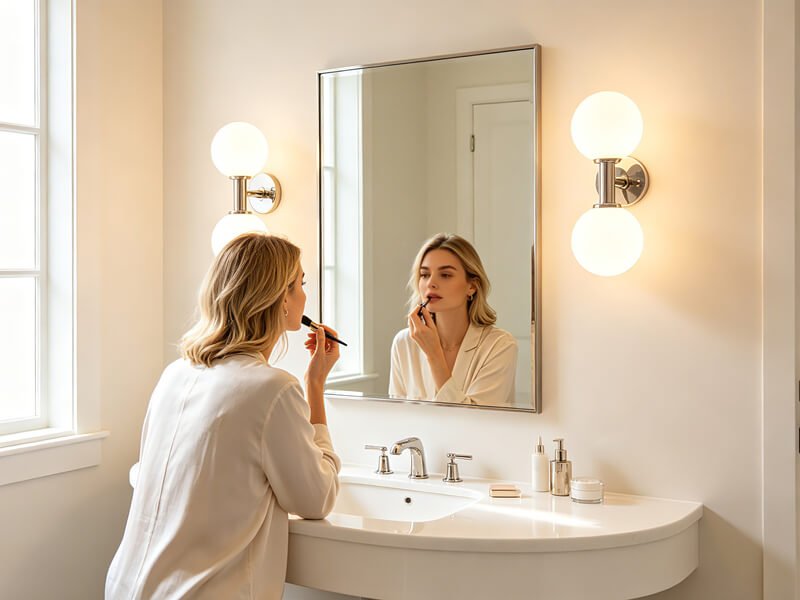
The bathroom vanity is the hardest-working corner of your home. It is where you wake up, get ready, check your skin, and often end the day. Yet most bathrooms rely on a single overhead light. That one ceiling fixture points down, and your face blocks the beam. The result is a shadowed reflection under your eyes, nose, and chin, plus a glare that makes detail work harder than it should be.
Mirror lights fix this by bringing illumination to face level. Lights placed on both sides of the mirror cross-light your features, which removes most shadows and shows colors more honestly. Lights above the mirror work well too, especially when they are wide, diffuse, and hung close to the mirror rather than near the ceiling. Either way, the goal is the same: even, comfortable light that lets you see yourself clearly without squinting.
Good vanity mirror illumination also changes how the room feels. A well-lit mirror adds depth, makes a small bathroom feel larger, and turns a plain wall into a polished focal point. With layered lighting, you can keep a bright, accurate light for morning grooming and soften it in the evening for a relaxing bath. That combination of function and atmosphere is why thoughtful bathroom mirror lighting is one of the highest-impact upgrades you can make.
The Main Types of Mirror Lights, Explained
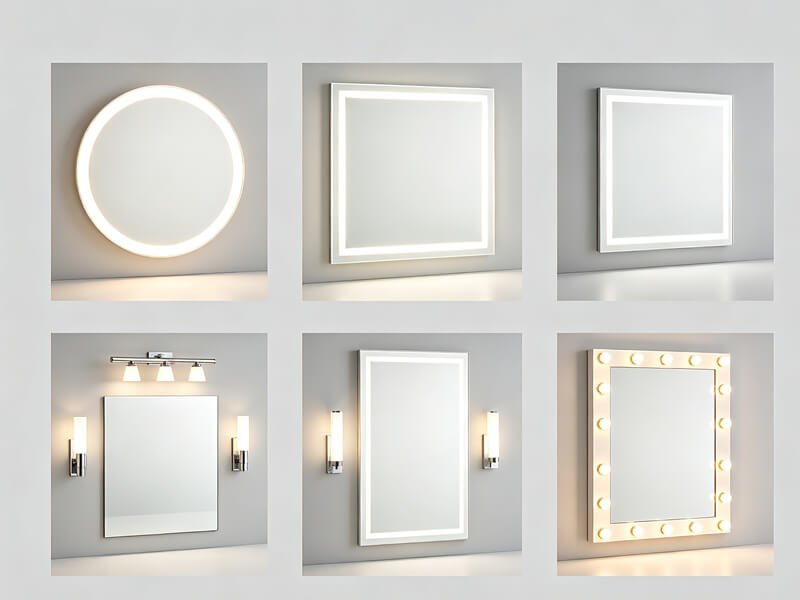
Mirror lights come in more styles than ever, and the choices can feel endless. Here is a simple breakdown of the main options and when each one shines. The right pick for you depends on the room, the mirror, and the way you use the vanity, so take a moment to match the type to your routine before you fall for a finish.
- Backlit mirrors. LED lights sit behind the glass, usually along the edges, and bounce off the wall to create a soft halo. A backlit bathroom mirror looks sleek and modern, adds ambient glow, and makes a mirror appear to float. It is gorgeous, but it is better for atmosphere than for precision grooming.
- Front-lit mirrors. LEDs are built into the front face of the mirror and shine directly onto you. A front-lit LED mirror gives clear, shadow-reducing task light, which makes it a favorite for makeup application, shaving, and skincare.
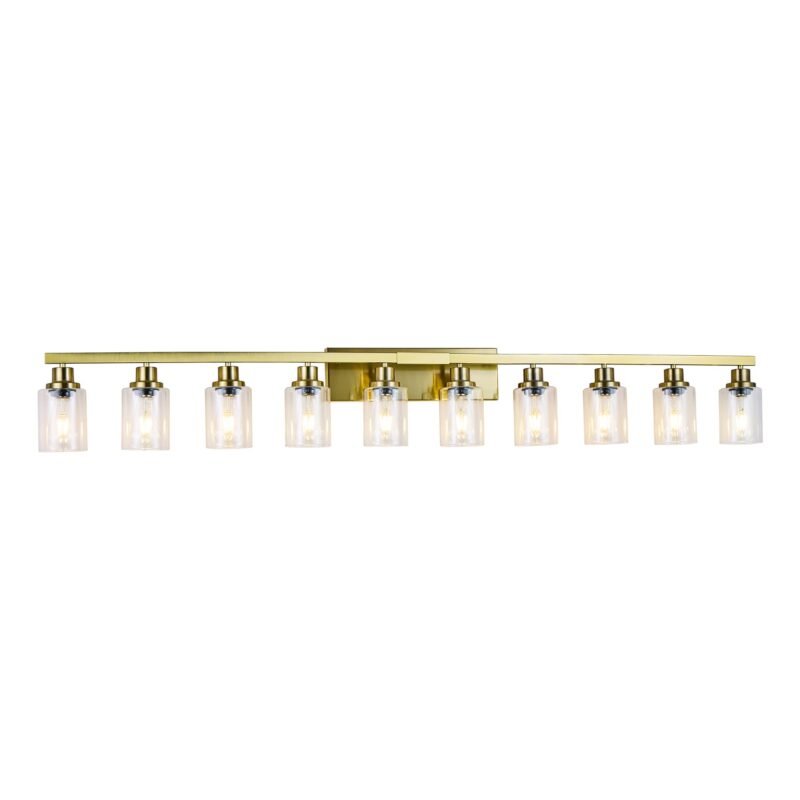
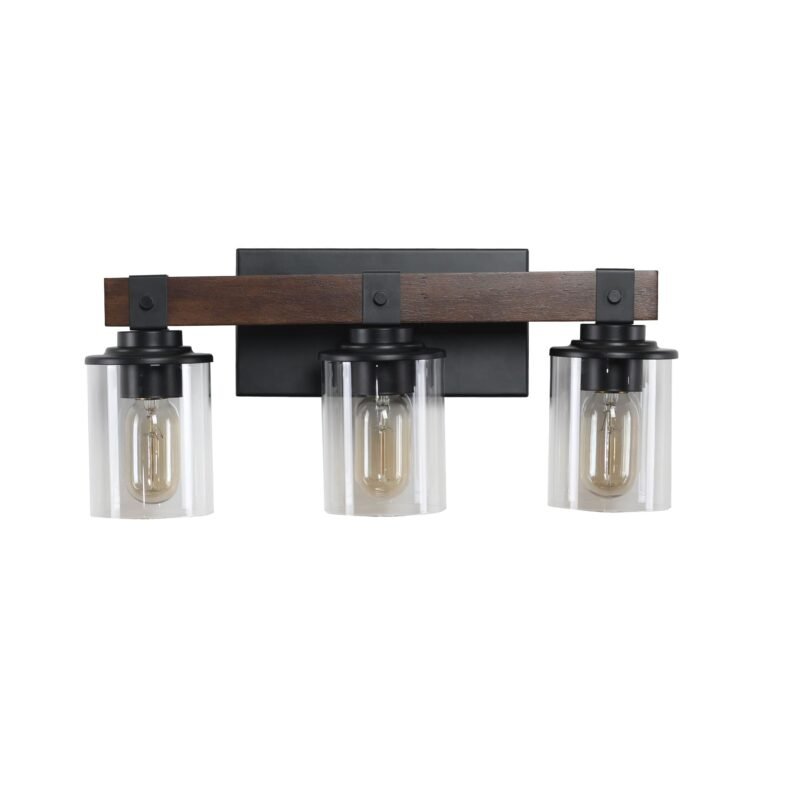
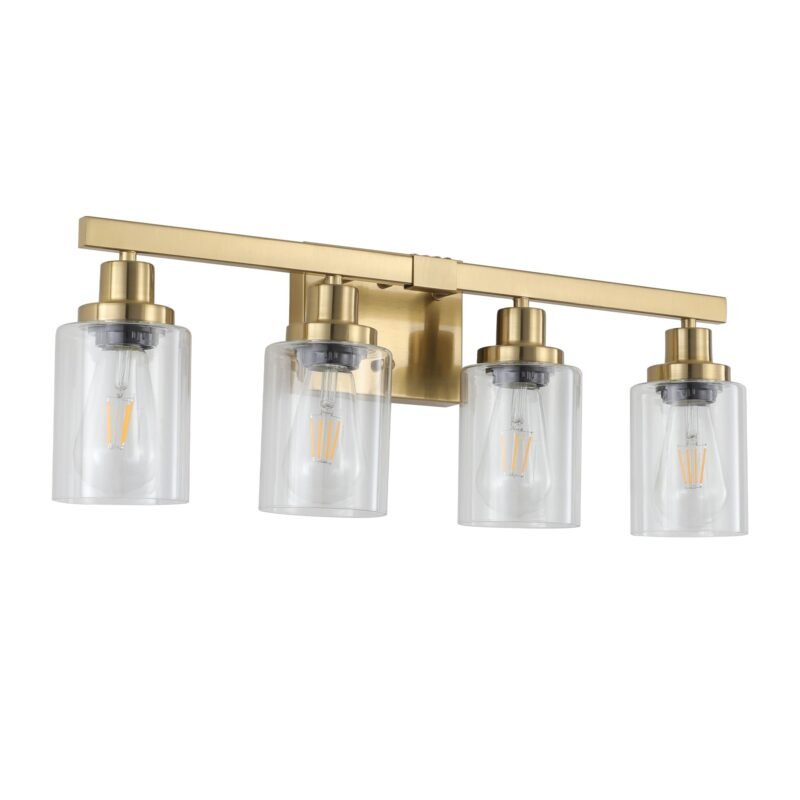
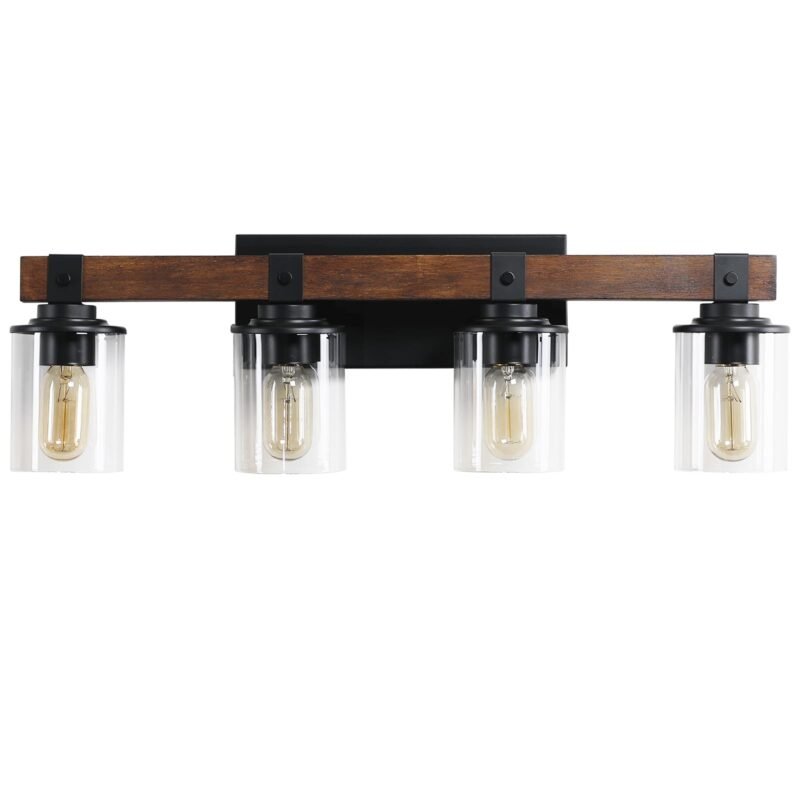
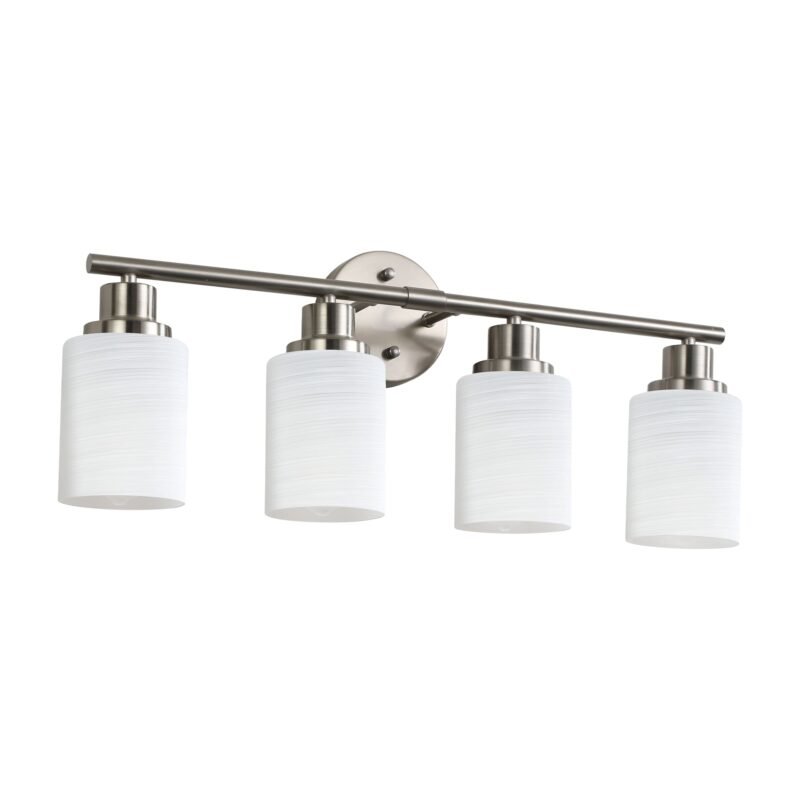
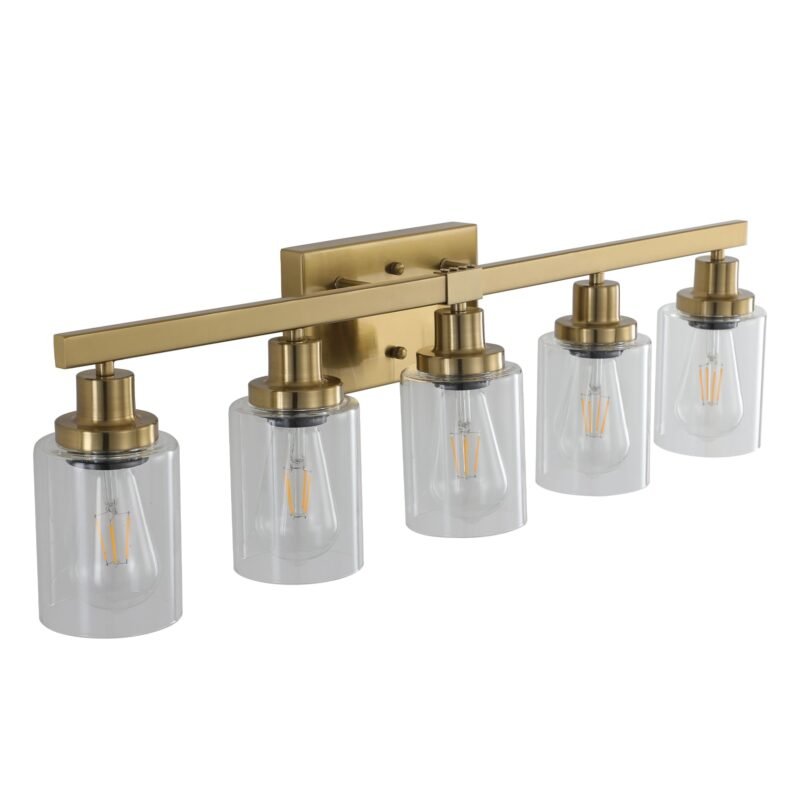
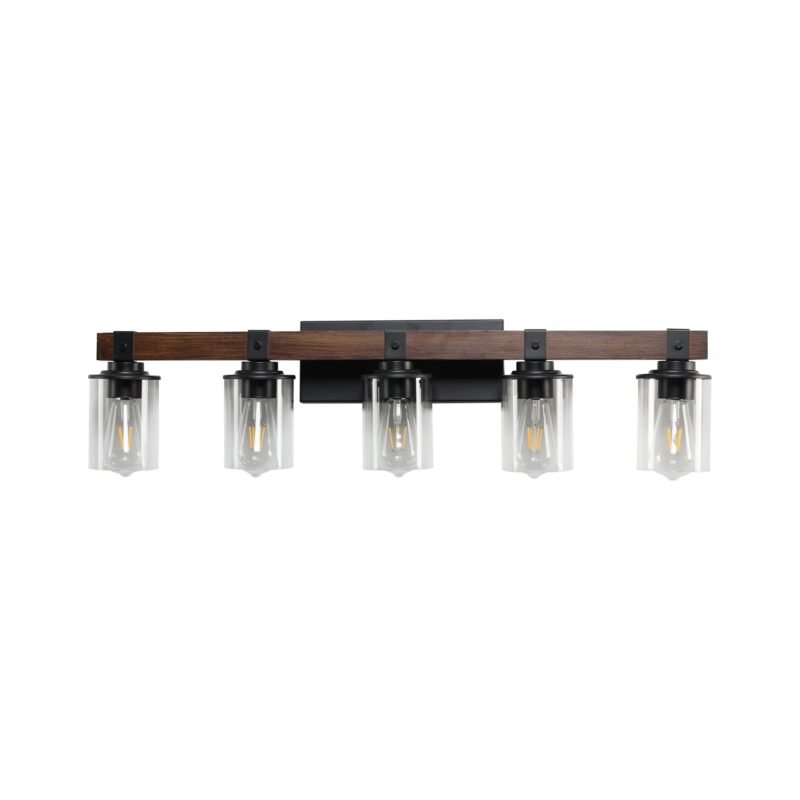
- Vanity bars and linear lights. These are the classic bathroom lights over mirror. A bar with two, three, or more bulbs sits above the mirror and spreads light across the vanity. They are affordable, easy to install, and available in almost every finish.
- Wall sconces. Mounted on one or both sides of the mirror, sconces deliver the most flattering light for the face. Side lighting at eye level is the gold standard for makeup and shaving because it removes lateral shadows.
- Hollywood-style mirrors. Rows of exposed bulbs frame the mirror, top and sides. Hollywood mirror lights create bright, even illumination and a glamorous look that suits vanity tables and dressing areas as much as bathrooms.
- Full-length mirror lights. A full length mirror with lights is perfect for dressing rooms, bedrooms, and master baths where you want to check your whole outfit in even light.
- Magnifying mirrors. A magnifying mirror with light brings detail work up close, which is why it is so popular for eyeliner, tweezing, and other precision tasks. A lighted makeup mirror with 5x or 10x magnification is a favorite gift and a genuinely useful desk companion.
- Lighted mirror cabinets. A mirror cabinet with lights combines storage and illumination, keeping the counter clear while lighting your reflection. Recessed versions hide neatly inside the wall, and wall-mounted versions work anywhere.
There is also the question of how the light is powered. Hardwired fixtures connect to your home wiring and give the cleanest look, which is why most vanity bars and sconces are installed this way. Plug-in mirror lights simply attach near an outlet and can be set up in minutes. Battery-operated and rechargeable models, from a small light up mirror on a desk to a full vanity mirror with LED lights, give you freedom to place the mirror anywhere without calling an electrician. If you are renting or want to test a look before committing, a plug-in or battery mirror is an easy way to start.
Integrated options deserve a special mention here. A mirror with LED lights built into the frame saves wall space, reduces clutter, and gives the vanity a seamless, modern finish. An LED vanity mirror often pairs built-in front lighting with useful extras, which is why it has become the most popular style for new bathrooms and vanities. Bathroom mirrors with lights now come in every finish, from brushed gold to matte black, so the functional choice rarely limits your design. When you browse, compare how the light spreads across your face, not just how bright the product photos look. You can also jump to the placement section to see the heights that make each style perform.
| Light Type | Best Placement | Strengths | Watch Out For |
|---|---|---|---|
| Backlit LED mirror | Anywhere, often alone | Spa-like ambience, modern look, soft glow | Weak as primary task light |
| Front-lit LED mirror | Single or double vanity | Clear task light, shadow-free reflection | Fixed light position |
| Vanity bar over mirror | Centered above the mirror | Even spread, many sizes and finishes | Can create downward shadows if hung too high |
| Wall sconces | Both sides of the mirror | Best facial lighting, elegant look | Needs wall space beside the mirror |
| Hollywood mirror | Vanity or dressing table | Bright, glamorous, even coverage | Busier visual style |
How to Choose the Right Mirror Lights for Your Bathroom
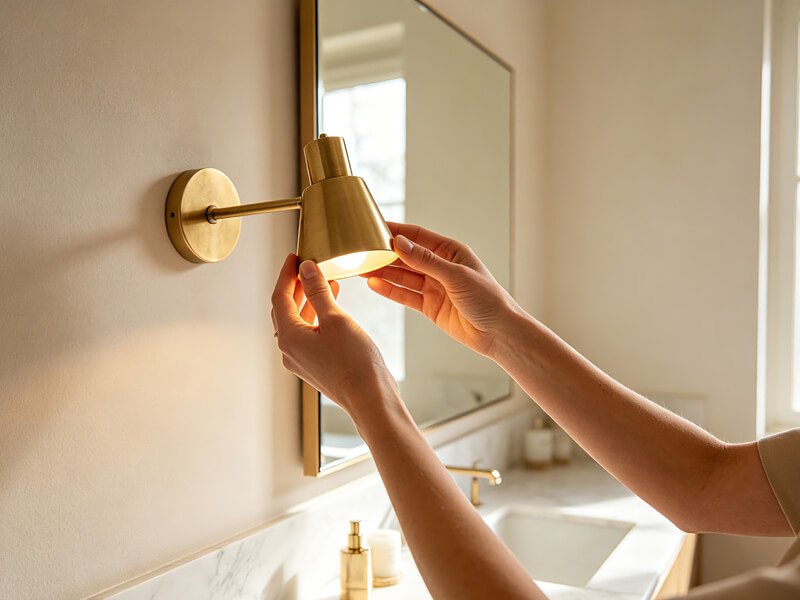
Start with the room, not the fixture. The size of the bathroom, the amount of natural light, and the way you actually use the mirror should guide every choice.
Think about function first. Is this a powder room used mainly by guests, or the main family bathroom where people shave and apply makeup every day? A powder room can get away with a pretty vanity light over mirror or a subtle backlit mirror, because the tasks are light. A family bathroom or ensuite deserves brighter, task-focused light, such as front-lit LEDs, sconces, or a solid vanity bar. If someone in the home is older, softer indirect light from a backlit mirror is easier on the eyes and reduces glare. Even a guest restroom mirror with lights can feel like a small luxury, so match the brightness to who uses the room, not just to the style.
Next, consider your existing setup. If the wall space beside the mirror is tight, an over-mirror bar or an integrated lighted mirror usually makes more sense than sconces. If you already have good general lighting in the room, the mirror light can focus on the face. If the bathroom has no window, plan for more lumens around the vanity. In rooms with limited natural light, a front-lit LED bathroom mirror or a pair of sconces does more for daily comfort than any decorative ceiling fixture.
Style matters too. A matte black or brass finish can anchor a modern vanity, while chrome and brushed nickel blend quietly with most bathrooms. Match the finish to your faucets and hardware for a cohesive look, or choose one accent metal and repeat it in two or three places. A vanity with mirror and lights is a practical favorite for dressing corners, guest baths, and rental apartments, because it delivers both function and style in one piece. And keep your budget realistic: mirror lights range from under fifty dollars to well over a thousand, so decide what matters most to you, features, style, or brand, before you start browsing.
Mirror Light Sizing: The Simple Rules That Work
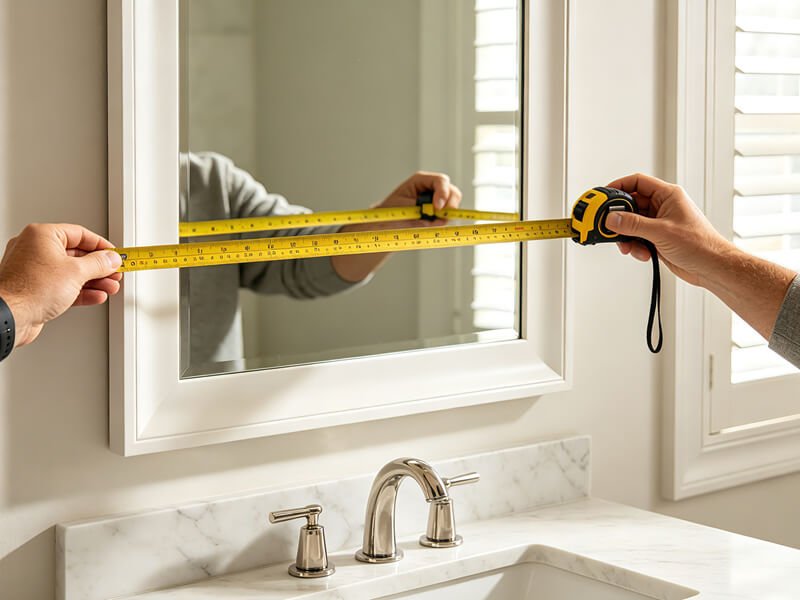
Sizing mistakes are the most common reason lighting looks off, and the fix is simple. Measure your mirror first. Then choose a light that covers about 75 percent of its width. Some designers allow a range of 70 to 90 percent, but the basic rule stays the same: keep the fixture narrower than the mirror and center it over the sink. That rule works whether you are shopping for vanity lights for mirror, a bath mirror with light, or a full bar fixture, because proportion drives both looks and light spread.
For a double vanity with two mirrors, use one light over each mirror and follow the same 75 percent rule for each. For a double vanity with one long mirror, divide the mirror in half, treat each half as its own zone, and center a fixture over each sink. Many people also use a single long linear bar spanning the full mirror for a clean, modern statement.
Here is a practical reference based on common vanity sizes:
| Mirror Width | Ideal Light Width | Suggested Setup |
|---|---|---|
| 24 to 30 inches | 18 to 24 inches | Small bar, single sconce, or compact round LED mirror |
| 36 to 48 inches | 27 to 38 inches | Three-light bar or two side sconces |
| 60 to 72 inches | 45 to 58 inches | Long linear bar or two fixtures over each sink |
Fixture width is only half the story. The number of bulbs matters too. A two-light vanity bar suits powder rooms and compact single-sink vanities. A three-light bar is the most popular size because it fits almost any bathroom and gives balanced light for grooming. Four-light and five-light bars belong on wider mirrors and larger vanities. When in doubt, remember that the full width of the fixture should never extend past the edges of the mirror.
Where to Place Bathroom Mirror Lights for a Shadow-Free Glow
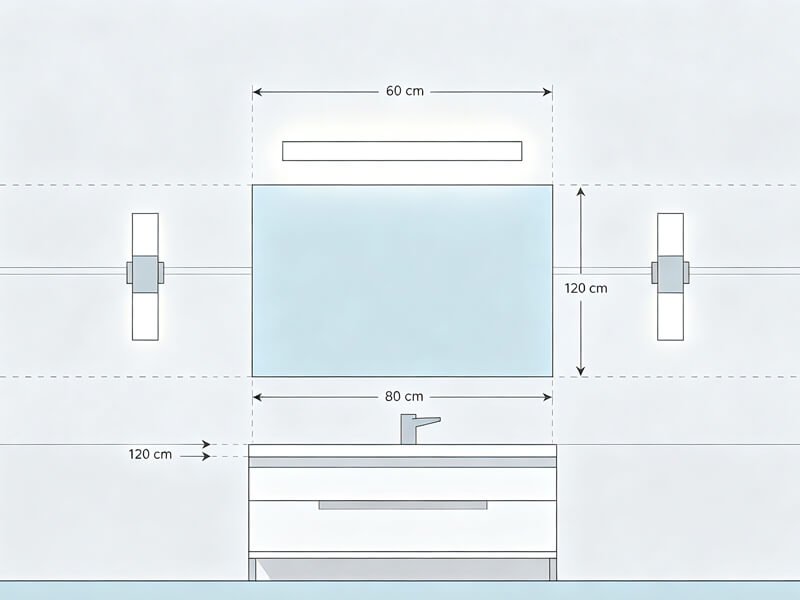
Placement does more for your reflection than the price of the fixture. A light that is too high sends its beam over your head, and your face falls into shadow. A light that is too low creates harsh upward shadows. The sweet spot keeps the source close to your eye level, not your ceiling.
For lights mounted above the mirror, the standard is simple: center the fixture 75 to 80 inches above the finished floor, or about 6 to 8 inches above the top edge of the mirror. This works for most rooms, and taller ceilings or taller users can push toward the higher end of that range. Whether you call them bathroom light fixtures over mirror, bathroom lighting fixtures over mirror, or simply vanity lights, the same height rules apply. For sconces on the sides of the mirror, aim for the center of the light at 60 to 65 inches from the floor, which sits at eye level for most adults. Space paired sconces about 36 to 40 inches apart, and you can bring them closer to 28 to 30 inches in a tight space.
When you hang the mirror itself, leave 5 to 10 inches between the top of the sink or backsplash and the bottom of the mirror. A taller faucet can let the mirror sit a little higher. And if a mirror is very tall or the room has high ceilings, adjust upward, but keep the light close to the face zone rather than drifting toward the ceiling.
Double vanities follow the same logic, with one adjustment. You can stay symmetrical with a matching fixture over each mirror, which feels safe and balanced in traditional bathrooms. Or you can use one long continuous fixture above both mirrors for a modern, architectural look. Both approaches work; choose based on the style of your cabinets and hardware.
| Scenario | Recommended Height | Extra Notes |
|---|---|---|
| Light above the mirror | 75 to 80 inches from the floor | Or 6 to 8 inches above the mirror top |
| Side sconces | 60 to 65 inches from the floor | Center of the light at eye level |
| Sconce spacing | 36 to 40 inches apart | 28 to 30 inches works in tight spaces |
| Mirror height | 5 to 10 inches above sink or backsplash | Raise it for taller faucets |
| Double vanity, two mirrors | One fixture centered per mirror | Match heights across both sinks |
Brightness, Color Temperature, and CRI: The Science of Flattering Light
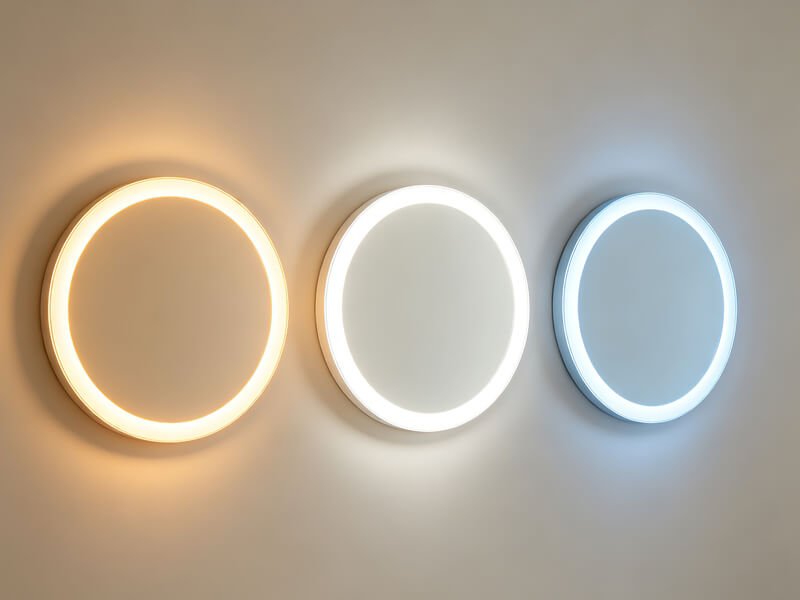
Three numbers control how good mirror lighting feels: lumens, color temperature, and CRI. Lumens measure how bright the light is. Color temperature, measured in Kelvin, decides whether the light looks warm or cool. CRI, or Color Rendering Index, measures how accurately colors appear under the light. Understanding these three makes shopping much easier.
For the area around a single mirror, most specialists recommend roughly 500 to 1,000 lumens from the vanity light itself. A small powder room may only need 500 to 800 lumens, while a primary bathroom with a large mirror and dark tile may call for 1,200 to 2,000 lumens or more. As a general target, plan for about 1,500 to 3,000 total lumens across the vanity area, and use dimming to fine-tune the level through the day. If you mostly use a makeup mirror with lights, add up the mirror fixture plus any sconces, because the total, not the label, determines how well you see.
Color temperature shapes both mood and accuracy. Warm light around 2,700K feels cozy and flattering in the evening, like a classic incandescent bulb. Light at 3,000K is a soft, pleasant warm white that suits most bathrooms. At 4,000K, the light turns neutral and closer to daylight, which makes colors easier to judge and feels crisp without being clinical. Many designers recommend 3,000 to 4,000K for bathroom mirrors, and makeup experts often prefer 3,500 to 4,000K so your look matches real-world conditions. Cooler light around 5,000 to 5,500K mimics bright daylight and is the most accurate for makeup, but it can feel harsh at night.
| Color Temperature | Feel | Best For |
|---|---|---|
| 2,700K warm white | Cozy, soft, golden | Evening baths, traditional bathrooms, powder rooms |
| 3,000K warm neutral | Soft but clear | Everyday family bathrooms, versatile styling |
| 4,000K neutral white | Crisp, natural, balanced | Grooming, makeup, bathrooms with little natural light |
| 5,000 to 5,500K daylight | Bright, cool, accurate | Precision makeup and shaving tasks |
CRI deserves special attention because it is easy to overlook. On a scale of 0 to 100, natural daylight scores 100. Light with a CRI of 90 or higher shows skin tones, makeup, and clothing colors accurately, which matters for a vanity. Fixtures with a CRI below 80 can make colors look flat or wrong, so you leave the house thinking your foundation matches when it does not. Look for a CRI of at least 90, ideally 90 to 95, for any mirror light you plan to groom under. Pair that accuracy with dimmable controls and you can shift from a precise morning light to a relaxed evening glow without changing a bulb.
| Vanity Task | Recommended Lumens | Ideal Setup |
|---|---|---|
| Makeup and shaving | 1,500 to 2,500 | Two sconces, front-lit mirror, or three-light bar |
| Everyday washing and styling | 1,200 to 1,800 | Two-light bar or one side sconce pair |
| Ambient glow and accents | 800 to 1,200 | Backlit mirror or LED strip |
In our showroom, we tell customers the same thing every week: buy the brightness you need, then add a dimmer. It turns one fixture into many moods.
Features Worth Paying For: Anti-Fog, Dimming, Touch Controls, and Smart Options
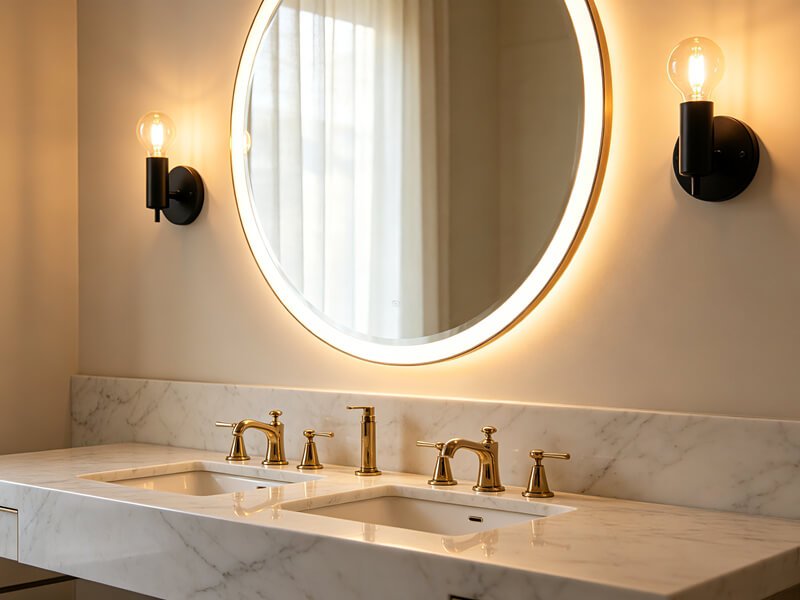
Modern mirror lights do much more than switch on and off. A few features are worth real money because they improve daily comfort. Before you buy a lighted vanity mirror, decide which extras you will actually use, then compare models that include them.
- Anti-fog technology. A built-in heating pad behind the glass keeps condensation away, so the mirror stays clear right after a hot shower. In steamy bathrooms, this is the feature homeowners mention most.
- Dimming. Adjustable brightness turns the same mirror into bright task light in the morning and soft ambient light at night. If you buy a dimmable LED fixture, pair it with a dimmer rated for LED loads to avoid flicker.
- Touch controls. A gentle tap on the glass switches the light on, off, and through brightness levels. This is handy when your hands are wet or full of products. An LED makeup mirror with adjustable brightness and a magnifying side is a great example of features working together on one compact unit.
- Color-tunable lighting. Some mirrors let you shift between warm and cool settings, so you can match the light to the time of day or to the room where you will be seen.
- Magnification. A lighted magnifying mirror with 5x or 10x power is a small addition that makes precision work dramatically easier.
- Smart extras. Bluetooth speakers, clocks, temperature displays, and voice-assistant compatibility turn a light up vanity mirror into a command center. Nice to have, but only worth the premium if you will actually use them.
- Motion sensors. Lights that switch on when you approach save energy and make late-night visits to the bathroom easier.
Think about which features match your routine before paying for extras. A powder room rarely needs a smart mirror with speakers. A family bathroom in a humid home, on the other hand, can make anti-fog and dimming feel essential rather than optional.
Installation and Safety: IP Ratings, Wiring, and Wet Areas
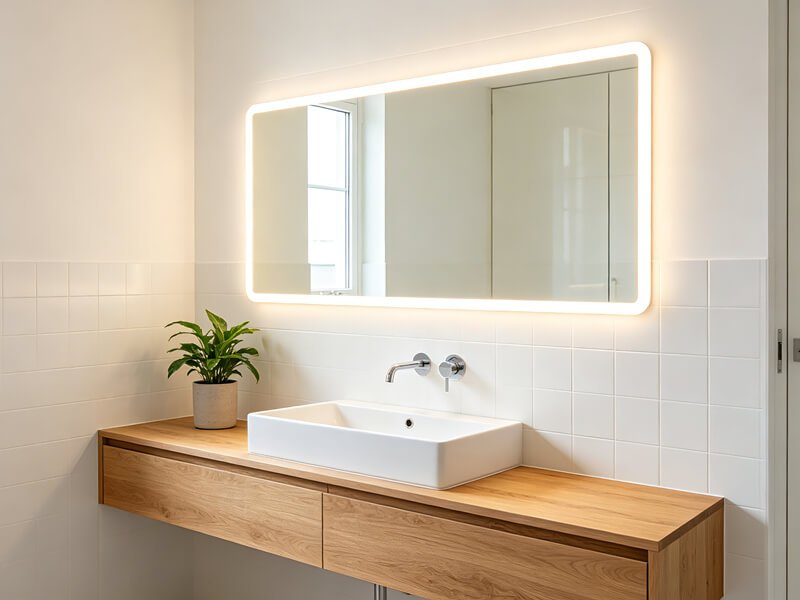
Water and electricity share every bathroom, so safety ratings are not optional. The two ratings you will see most are IP and damp versus wet location.
IP stands for Ingress Protection. The first digit rates protection against dust and solid objects, and the second rates protection against water. For bathroom mirror lighting, an IP44 rating is the common starting point because it resists splashes and handles the humidity around a vanity. The closer a fixture gets to a shower, bathtub, or water source, the higher the protection required. Most mirror lights only need damp-rated status: safe in humid air and around indirect moisture. Wet-rated fixtures are required where direct water can hit them, such as inside a shower. Check the product label, and when in doubt, ask a professional.
Installation options also affect the project. Hardwired mirror lights look clean and permanent, but they usually require an electrician, especially if new wiring is needed. Plug-in models are easier and can be installed in minutes near an outlet. Battery-operated and rechargeable mirror lights offer the most flexibility, and they are perfect for renters or anyone avoiding electrical work. For ceiling fixtures above a bathtub, local codes often require a minimum clearance above the tub rim, so always confirm with a licensed electrician before hanging anything over water.
Finally, choose energy-efficient LEDs where possible. ENERGY STAR certified LED bulbs use dramatically less electricity than incandescent bulbs, stay cooler to the touch, and last far longer. That small choice lowers your energy bill and reduces how often you climb up to change bulbs. Look for trusted safety certifications on the fixture, such as UL listing, so you know the product has been tested for the conditions in your home.
Style Ideas: Matching Mirror Lights to Your Bathroom Design
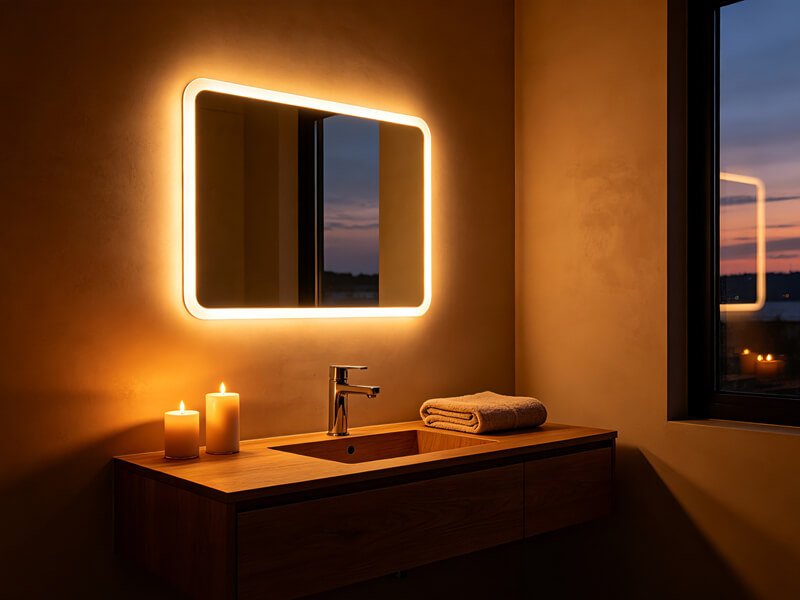
Mirror lights are as much about style as they are about function. The right fixture can anchor a whole design, and the wrong one can date a room. Here are combinations that consistently look great.
- Minimalist bathrooms. A frameless backlit or front-lit LED mirror creates a clean, seamless look. Keep the lines simple and let the light do the talking.
- Round mirrors. A round LED mirror softens a modern space and works beautifully in smaller bathrooms. Pair it with a slim horizontal bar above, or two small sconces on the sides.
- Modern farmhouse and industrial. Matte black fixtures with warm bulbs pair well with wood vanities, marble counters, and exposed details. Black and gold combinations are especially popular for neutral bathrooms.
- Traditional and transitional. Brushed nickel, chrome, and bronze sconces with glass shades bring warmth without feeling dated. Bell, cylinder, and ribbed glass shapes add subtle character.
- Luxury and spa-like. Backlit mirrors, dimmable lighting, and alabaster or opal glass shades create a calm, hotel-like atmosphere. Add a statement pendant above the vanity for extra polish.
- Hollywood glam. Rows of exposed bulbs around a makeup vanity deliver bright, even light and a playful vintage feel that never seems to go out of style.
Layering is the secret to rooms that feel finished. Instead of relying on one source, combine a task light at the mirror with softer ambient light from a ceiling fixture or recessed downlights. Add an accent light to highlight a textured wall or a favorite tile detail, and you have depth instead of flatness. If you mix metals, keep a clear hierarchy: choose one dominant finish for the largest pieces and one accent finish that appears in at least two places, such as the light fixtures and the faucets.
Do not be afraid to break symmetry on purpose. A single sculptural pendant beside a mirror, or two pendants hung at slightly different heights over a double vanity, can look intentional and modern. A mirror vanity corner with Hollywood-style bulbs is another favorite in bedrooms and walk-in closets, where the lighting doubles as decoration. Just make sure the light still lands on your face rather than above your head, because a beautiful fixture that shadows your reflection will never feel right. When you shop for lights for the mirror, keep that balance in mind and compare how each option performs at your height.
Cost, Energy Savings, and Long-Term Value
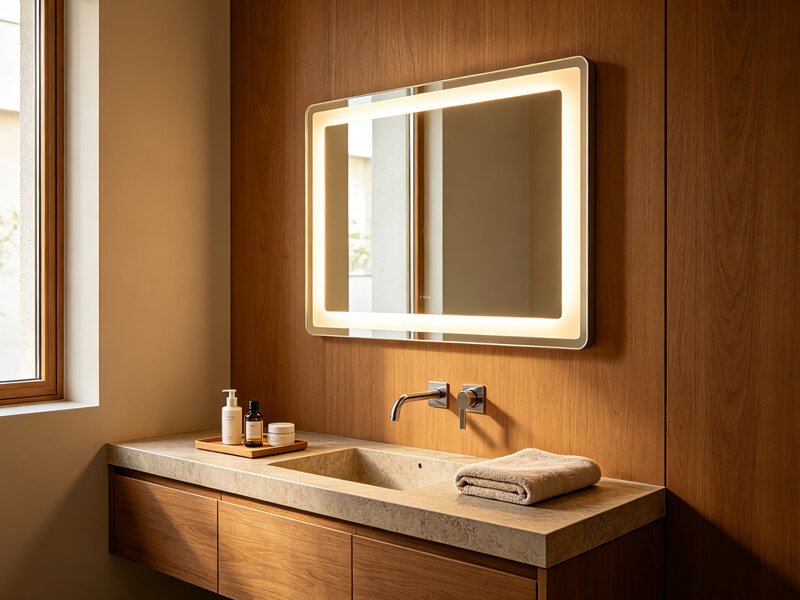
Mirror lighting prices vary widely, and understanding the range helps you set realistic expectations. The good news is that a well-chosen fixture does not need to be expensive, and a lighted bathroom mirror can be one of the best value upgrades in a remodel. In general:
- Small LED mirrors and basic vanity bars: about $100 to $250.
- Standard vanity LED mirrors with dimming or anti-fog: about $250 to $500.
- Full-length lighted mirrors and premium smart mirrors: about $500 to $1,000 or more.
- Anti-fog LED mirrors with extra features: often $600 to $1,500.
Separate fixtures, such as a pair of sconces plus a standard mirror, can start cheaper, but designer finishes and multiple wiring points can quickly push the total higher than one integrated unit. For a simple modern look on a budget, an all-in-one mirror with lights is often the most cost-effective path.
The running costs are where LED mirror lights shine. LEDs use up to 80 percent less electricity than traditional incandescent bulbs, and quality LED modules are rated for 25,000 to 50,000 hours of life. That means years of daily use before replacement, plus lower energy bills and less heat in a room that already runs warm. LED bathroom mirrors have become a defining feature of modern remodels for exactly this reason. The United States Department of Energy maintains a helpful overview of LED lighting benefits, and ENERGY STAR publishes guidance on choosing certified bulbs and fixtures for the best performance. For safety, look for fixtures tested by recognized labs such as UL Solutions.
Are lighted mirrors worth it? For most homes, yes. The daily comfort of clear, shadow-free light, the convenience of anti-fog glass, and the polished look of integrated lighting make it one of the more satisfying bathroom upgrades available. A vanity mirror illuminated by even, high-CRI light also simplifies getting ready, because what you see at home matches what you see outside. It is a feature that reads as modern and valuable to future buyers, even if resale value was never your reason for buying. For more budget guidance, major home retailers like Lowe’s and lighting specialists such as Kichler publish helpful selection tools and product ranges that make comparing mirror and lights options easier.
How to Clean and Maintain Your Mirror Lights
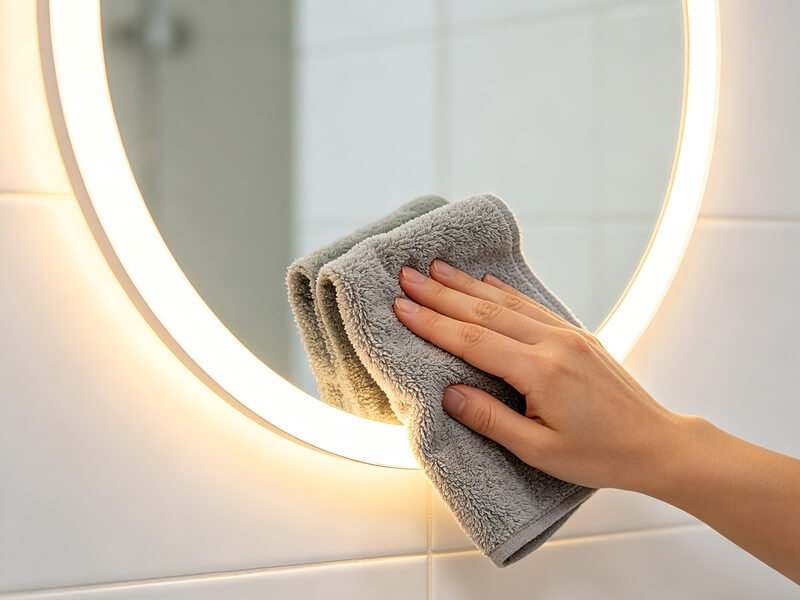
Bathroom mirror lights need surprisingly little care, and a few habits keep them looking new for years. Since these fixtures live in a humid room, a small cleaning routine pays off.
- Wipe the glass with a soft microfiber cloth and a mild glass cleaner. Avoid abrasive pads and harsh chemicals that can dull the finish or scratch the LED edges.
- Never spray cleaner directly onto the mirror. Mist the cloth instead, so liquid cannot seep into seams or behind the frame.
- Dust the fixture and shade weekly to keep brightness high. Dust reduces light output faster than most people expect.
- Replace bulbs in matching sets. If one bulb dies, change the others in the same fixture at the same time so the light stays consistent in color.
- Once a year, check wall-mounted fixtures for loose screws or exposed wiring, especially in humid bathrooms. If anything looks worn, call a qualified electrician.
- For anti-fog mirrors, keep the demister pad area clear and confirm the heating element still clears the glass after a hot shower.
Frequently Asked Questions About Mirror Lights
1. Are LED mirror lights energy efficient? Yes. LED mirror lights use a fraction of the electricity that incandescent bulbs use while providing the same or better brightness. Combined with a long lifespan of up to 50,000 hours, they are one of the most efficient lighting choices for a bathroom.
2. What is the best color temperature for a bathroom mirror? For most people, 3,000K to 4,000K gives the best balance of comfort and accuracy. If you apply makeup and want the closest match to outdoor light, choose a mirror around 3,500K to 4,000K, or one with adjustable color temperature.
3. Are backlit or front-lit mirrors better? It depends on the job. Backlit mirrors create soft ambient glow and a modern look, while front-lit mirrors cast direct, shadow-reducing light on your face for grooming. Many bathrooms benefit from a combination of both.
4. Do lighted mirrors need hardwiring? Not always. Hardwired models require an electrician and look the cleanest. Plug-in models install quickly near an outlet, and battery-operated or rechargeable mirrors need no wiring at all, which makes them ideal for renters.
5. What does anti-fog mean on a mirror? An anti-fog mirror has a built-in heating element that warms the glass and prevents condensation, so it stays clear when the room is steamy. It is a genuine convenience for bathrooms where the mirror is used right after showers.
6. How long do LED mirrors last? Quality LED modules are typically rated for 25,000 to 50,000 hours of light. With everyday use, that translates to many years of service before the light source needs attention.
7. What size light goes over a bathroom mirror? Choose a fixture about 75 percent of the mirror width and keep it centered over the sink. Never let the fixture extend past the edges of the mirror unless you are making a deliberate oversized statement.
8. Can I use mirror lights in a small bathroom? Absolutely. A round LED mirror or a compact vanity light saves wall space while adding light. Wall-mounted fixtures are a better choice than relying on a single ceiling light, which creates shadows on the face in tight rooms.
9. What does IP44 mean on a bathroom light? IP stands for Ingress Protection. The first digit rates protection against dust, and the second rates protection against water. IP44 means the fixture resists splashes, which makes it suitable for the humid, splash-prone areas of a bathroom.
10. Are lighted mirrors worth the cost? For most homeowners, yes. They combine a mirror and a light source into one product, save wall space, reduce shadows during grooming, and add a modern, finished look. Over years of use, the energy savings and convenience easily justify the price.
Mirror lights are one of those small upgrades that change the way a room feels every single day. Choose the right type, size it to your mirror, place it at the correct height, and pick a color temperature that suits your routine, and the bathroom stops being a place where you struggle to see yourself. It becomes a place that works with you, in the morning light and the evening calm.
Start with your mirror measurement and your daily habits, then let style follow. Remember the simple rules: keep overhead fixtures close to the mirror, put sconces at eye level, aim for a CRI of 90 or above, and look for features like dimming and anti-fog that match how you live. Whether you are refreshing a powder room, remodeling a master bath, or building a new home, these choices are within reach at almost any budget.
If you are ready to see the difference for yourself, explore the mirror lights and bathroom vanity lighting collection at Lighting Depot USA. We carry a curated range of LED mirrors, vanity bars, sconces, and accessories that make it easy to find the perfect match for your space and style. Compare finishes, check the specs, and bring home a mirror that makes you look forward to your reflection. Still weighing the details? The frequently asked questions above answer the most common follow-ups in plain language.